For many, the word spirituality brings up a mix of curiosity, skepticism, and confusion. At Lataita, we often hear questions like:
“What does it even mean?”
“Is it religious?”
“Isn’t it just wishful thinking?”
These are valid questions — and they usually come from people who have spent much of their lives operating from logic, reason, and science. People who, just like many of us, were trained to analyze, plan, and prove everything.
But eventually, some of us reach a point where logic can no longer explain what we’re experiencing — whether it’s physical illness with no medical cause, a deep inner emptiness despite external success, or repeated life patterns that don’t make sense on paper.
That’s often where the spiritual journey begins.
Breaking Down the Myths
Let’s address some of the most common misconceptions about spirituality — because it’s these myths that often prevent people from ever exploring it.
Myth 1: Spirituality is about abandoning logic.
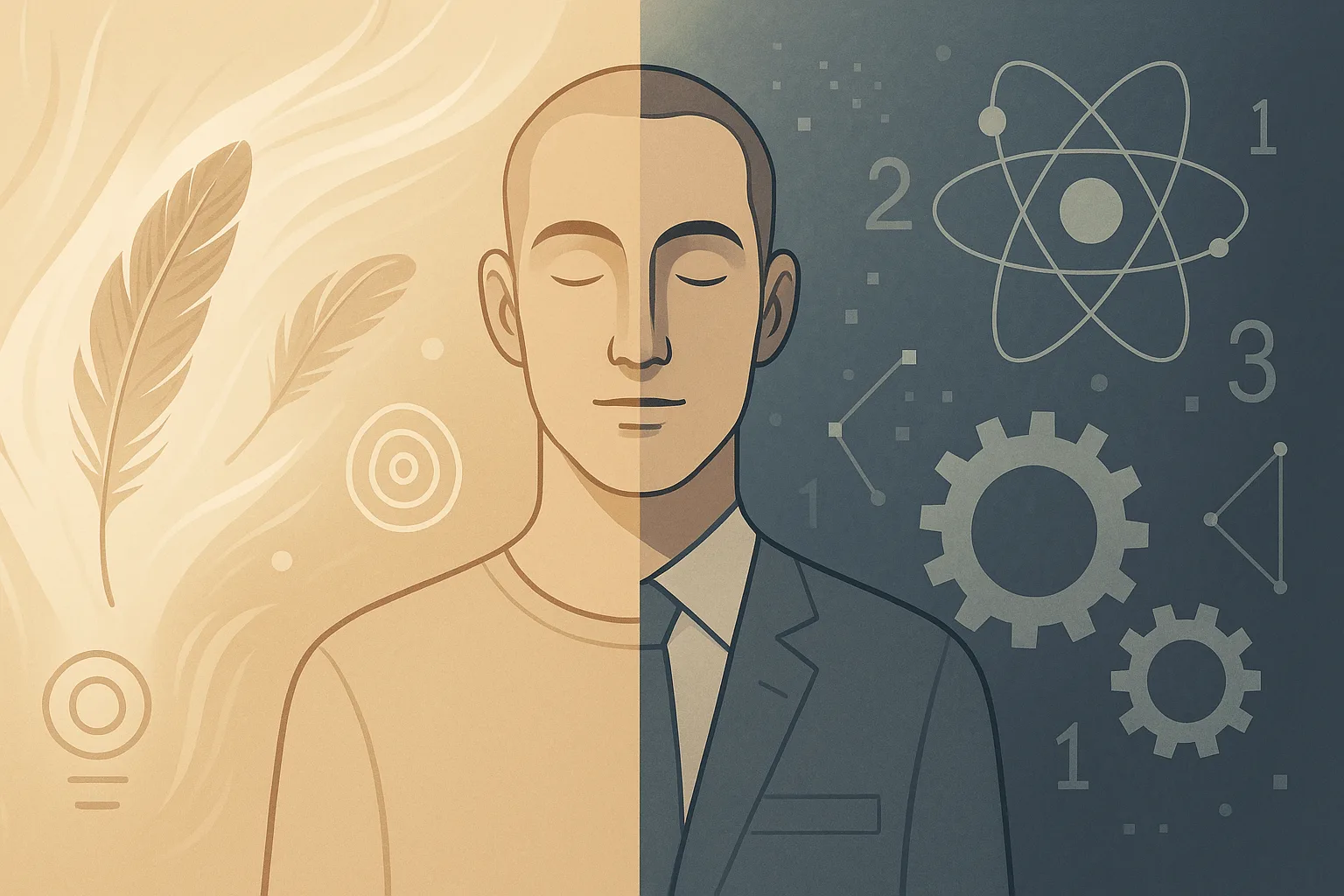
This is one of the biggest misunderstandings. Spirituality is not in conflict with logic — it simply goes beyond it. The mind is a powerful tool, but it’s not the only tool we have. Many of us spent years relying solely on the intellect to make decisions, solve problems, and navigate life. But eventually, we discovered that the logical mind has limits — especially when it comes to inner peace, fulfillment, and healing. Spirituality invites us to honor the mind and reconnect with intuition, feeling, and a deeper sense of knowing.
Myth 2: You need special powers or abilities to be spiritual.
You don’t have to be psychic, enlightened, or able to channel entities in order to live a spiritual life. Everyone has access to deeper awareness — it’s part of being human. Intuition, insight, energy sensitivity — these are not “gifts” given to a few chosen people. They are skills that can be remembered, cultivated, and practiced. Spirituality isn’t about being someone else. It’s about reconnecting with what’s already inside of you.
Myth 3: You have to leave your current life behind.
Another common fear is that exploring spirituality means you’ll have to give up your job, move to the mountains, or radically change your lifestyle. But spirituality isn’t about where you live or what you do — it’s about how you relate to life. You can be a parent, a CEO, an artist, or a student and still live spiritually. You don’t need to escape the world to find peace. In fact, the deeper invitation is to find peace within the world — in the ordinary, in your relationships, in the small moments.
Myth 4: Spirituality is abstract, impractical, or unrealistic.
Many people assume that spirituality is too vague or “unreal” to be useful. But in truth, the spiritual journey often leads to the most practical outcomes: improved mental health, emotional regulation, clearer decision-making, and greater resilience in the face of life’s challenges. While spirituality may begin with inner reflection, it naturally leads to real-world integration — to becoming more present, more aware, and more aligned in everything you do.
A Broader Way of Seeing
Many of us at Lataita have walked the same road: raised in logic, shaped by systems that required plans, outcomes, and measurable success. But at some point, we found ourselves in a place where those tools — as helpful as they were — no longer answered the deeper questions. Why am I feeling this way? Why do I keep repeating this pattern? Why am I still unwell when I’ve done everything “right”?
Spirituality is not about dismissing what we know — it’s about acknowledging that there is more to know, and that some of it cannot be found in books, labs, or external systems.
It’s found by looking inward.
So What Is Spirituality?
Spirituality is, at its heart, the process of becoming more conscious — of ourselves, of our thoughts and patterns, of how we relate to others, and of how we create our lives.
It’s about being present. It’s about noticing your emotions without being controlled by them. It’s about reconnecting with intuition — that quiet voice within that often knows the truth before our mind catches up. It’s about creating space for reflection, meaning, and choice.
Spirituality invites you to ask different questions. Not just how do I fix this?, but what is this trying to show me? Not just what should I do?, but what feels aligned with who I really am?
From Idea to Practice
You don’t need to become someone else to begin. Start by observing your life with more presence. Take a few quiet breaths before your day starts. Reflect on why certain patterns repeat. Journal your thoughts. Be curious.
Meditation, energy work, conscious movement, time in nature — these aren’t spiritual trends. They’re tools for tuning in, calming the mind, and accessing deeper awareness. You can begin with five minutes a day and let your practice grow naturally.
Above all, spirituality is not something you have to force. It’s a remembering. A returning. A softening into what’s already here.
A Word on Skepticism
Skepticism is healthy. In fact, it’s welcome. Question everything — especially in spiritual spaces. Stay grounded. Use discernment. Trust your own experience above all else. And know that you’re not alone in feeling unsure. Many of us began with doubt — and still carry it from time to time.
But when doubt is balanced with curiosity, growth becomes possible.
Final Thought
You don’t have to label yourself “spiritual.” You don’t have to know where you’re going. You just have to be willing to see things differently — to look beyond the surface, to question old beliefs, and to begin listening to the deeper parts of yourself.
Spirituality is not about becoming someone else — it’s about becoming more authentically you.
And that journey? It doesn’t begin with knowing everything.
It begins with just one step.
“A journey of a thousand miles begins with a single step” – chapter 64 Tao Te Ching